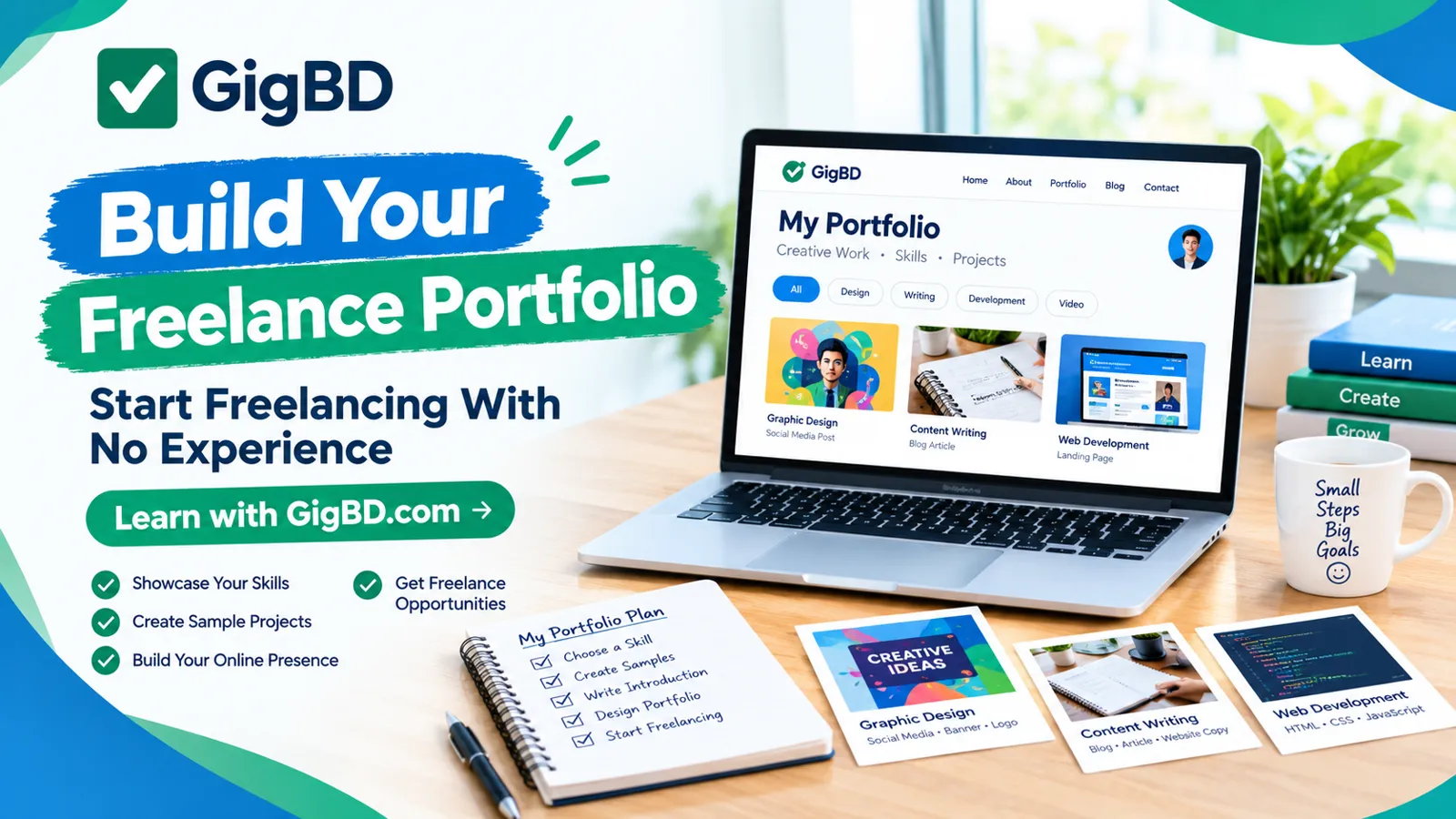
How to Build a Personal Brand Online and Stand Out in Your Career
Introduction
In today's digital world, having useful skills is important, but knowing how to present those skills can also make a difference. Whether you are a freelancer, content creator, designer, student, or aspiring digital professional, building a personal brand can help people understand what you do and what makes your work valuable.
A personal brand is the impression people form about your skills, expertise, professional values, and communication style. It does not require becoming famous or having thousands of followers. Instead, it involves presenting yourself consistently and honestly across the platforms where you want to connect with others.
At GigBD.com, we aim to help readers learn about digital skills, online work, freelancing, and professional development. This guide explains how to build your online identity step by step, even if you are starting with a small audience and limited experience.
1. Understand What Personal Branding Means
Personal branding is the way you communicate your professional identity to the world.
It includes your skills, the type of work you do, the problems you can help solve, and the way you interact with other people.
For example:
A graphic designer may focus on clean and effective visual communication.
A writer may build a reputation for clear, well-researched articles.
A web developer may showcase practical websites and technical projects.
A virtual assistant may emphasize organization and reliable communication.
A content creator may focus on educational videos about a specific topic.
Your personal brand should reflect your real abilities and interests. You do not need to pretend to be an expert in everything.
Readers exploring digital careers can visit GigBD.com for more educational information about online work and professional skill development.
2. Choose Your Main Area of Expertise
Before creating profiles or publishing content, decide what you want people to associate with your name.
Trying to promote too many unrelated services at once can make your professional identity confusing.
Start by answering three questions:
What can I do? Identify the skills you already have or are actively developing.
Who can benefit from my skills? Think about the businesses, individuals, or audiences who may need your services or knowledge.
What do I want to be known for? Choose a clear professional direction that matches your goals.
For example, instead of describing yourself as someone who does everything online, you might introduce yourself as a beginner content writer specializing in educational blog articles.
You can expand into other areas as your experience grows.
A clear focus makes it easier to choose portfolio samples, write profile descriptions, and create relevant content.
3. Create a Professional Online Profile
Your online profile is often one of the first places people look when they want to learn more about you.
Choose platforms that are relevant to your goals. Depending on your field, these might include a professional networking site, a freelance marketplace, a portfolio platform, or your own website.
A professional profile should include:
A clear and appropriate profile photograph or visual identity.
A short description of your skills.
The services or topics you focus on.
Relevant examples of your work.
Accurate qualifications and experience.
A suitable way to contact you.
Keep your information consistent across platforms. Use a similar professional description and avoid presenting contradictory details about your skills or experience.
You do not need to create accounts on every available platform. Start with one or two that suit your goals and maintain them properly.
For more beginner-friendly guidance about digital work, explore GigBD.com.
4. Develop a Consistent Visual Identity
Visual consistency can make your professional presence easier to recognize.
You can create a simple visual identity using a consistent profile image, a limited color palette, readable typography, and a clean layout.
For example, if you publish educational content, you might use the same style for your article graphics, profile banners, and presentation slides.
Consider these guidelines:
Choose two or three complementary colors.
Use readable fonts.
Keep your profile images clear.
Avoid overcrowded graphics.
Use original visuals or properly licensed materials.
Make sure text remains readable on mobile devices.
You do not need an expensive branding package to begin. Simple, consistent design choices can be enough for a beginner.
If you are creating educational content for a website, a consistent identity also helps readers recognize your articles. At GigBD.com, we encourage creators to think about both content quality and clear presentation.
5. Share Useful Content Regularly
Publishing useful content is one way to demonstrate your knowledge and help people understand your professional interests.
Your content should provide value instead of simply promoting your services in every post.
Examples include:
Writers: Share writing tips, article samples, or explanations of how you research a topic.
Designers: Publish selected designs and explain the purpose behind your visual choices.
Developers: Demonstrate a small project and describe the problem it solves.
Educators: Create practical tutorials or short explanations of common questions.
Digital work beginners: Share useful lessons you have learned while developing your skills, without exaggerating your results.
Choose a schedule that you can maintain. Publishing one thoughtful post each week may be more sustainable than publishing many low-quality posts and then stopping.
You can also explore content ideas through the educational articles on GigBD.com.
6. Show Evidence of Your Skills
A personal brand becomes more credible when it is supported by actual examples.
You can demonstrate your abilities through portfolio projects, practical tutorials, original articles, completed assignments, or case studies.
When presenting a project, explain:
What you wanted to achieve.
What work you completed.
Which skills or tools you used.
What you learned from the process.
What you would improve next time.
If a project was created for practice, identify it as a practice project. If you worked with a real client, obtain permission before sharing confidential details or unpublished work.
Avoid inventing testimonials, qualifications, client names, or performance statistics.
Your goal is to help people evaluate your work fairly.
If you are still learning, showing steady progress can be more convincing than making unsupported claims about expertise.
7. Build Trust Through Professional Communication
Your personal brand is influenced by how you communicate, not just by what you publish.
Professional communication includes responding respectfully, explaining your services clearly, keeping commitments, and admitting when you do not know something.
Follow these habits:
Use polite and clear language.
Reply within a reasonable timeframe.
Ask relevant questions when requirements are unclear.
Be honest about deadlines and limitations.
Avoid promising results you cannot control.
Respect other people's time and privacy.
If you receive feedback, consider it carefully rather than responding defensively. You do not have to agree with every opinion, but respectful communication helps maintain professional relationships.
Trust takes time to develop. Consistent behavior is more valuable than a polished profile alone.
At GigBD.com, readers can continue exploring educational resources related to digital work and professional development.
8. Use Social Media With a Clear Purpose
Social media can help you connect with people who share your professional interests, but you do not need to use every network.
Choose platforms based on the type of work you do and the audience you want to reach.
For example, a visual designer may benefit from platforms that showcase images, while a writer may prefer publishing articles or participating in relevant professional discussions.
Before posting, ask yourself:
Is this content relevant to my professional goals?
Does it provide useful information?
Does it accurately represent my work?
Am I comfortable making it public?
Does it respect other people's privacy and rights?
You can separate personal and professional accounts if that makes your online presence easier to manage.
Avoid buying fake followers or engagement. Numbers alone do not demonstrate expertise, trust, or the quality of your work.
Focus on meaningful connections and useful contributions rather than chasing every trend.
9. Create a Simple Personal Website
A personal website can provide a central place to introduce yourself, showcase your work, and explain your services.
It is optional, especially when you are starting out. A well-maintained profile or portfolio on an existing platform may be enough initially.
If you decide to create a website, consider including:
Home page: A brief introduction and an explanation of what you do.
About page: Your professional background, interests, and relevant skills.
Portfolio page: Selected examples of your work.
Services page: The services you offer and the type of projects you accept.
Contact page: A suitable way for people to reach you.
Keep your website simple, mobile-friendly, and easy to navigate. Check that all links work and that the information remains current.
If you publish educational articles, organize them into relevant categories so visitors can find related information easily.
For website content inspiration and digital work education, visit GigBD.com.
10. Build Genuine Professional Relationships
A strong personal brand is not built entirely through posting content. It can also grow through genuine professional relationships.
You can connect with people in your field by participating in relevant discussions, attending online events, joining professional communities, or collaborating on appropriate projects.
Useful ways to build relationships include:
Offering thoughtful comments on relevant work.
Sharing resources that genuinely help others.
Asking specific questions.
Giving credit when using other people's ideas.
Collaborating on projects with clear expectations.
Thanking people who provide useful feedback.
Avoid sending large numbers of unsolicited promotional messages. Build conversations around shared interests and relevant opportunities.
Professional relationships develop at different speeds, so do not expect every interaction to lead to a job or business opportunity.
11. Protect Your Reputation and Privacy
Your online reputation is an important part of your professional identity.
Before publishing something, consider whether it is accurate, respectful, and appropriate for your intended audience.
Use these practices:
Check facts before sharing information.
Correct mistakes when you discover them.
Avoid misleading claims about your skills.
Do not publish confidential client information.
Obtain permission before sharing other people's work.
Use strong passwords and secure your accounts.
Review privacy settings on your professional profiles.
You can build a recognizable professional identity without sharing private details about your personal life.
Be especially careful with public contact information and documents that may contain sensitive data.
At GigBD.com, we encourage readers to approach online opportunities thoughtfully and to develop responsible digital habits.
12. Create a 30-Day Personal Branding Plan
If you are unsure how to begin, use this simple four-week plan to establish the foundation of your personal brand.
Week 1: Define your direction
Choose your primary skill or professional topic.
Identify the audience you want to reach.
Write a short and accurate professional introduction.
Decide which platform best suits your goals.
Week 2: Improve your profile
Update your profile description.
Select suitable profile visuals.
Organize your work samples.
Make your contact information and service details clear.
Week 3: Publish useful content
Share one practical tip or tutorial.
Publish a relevant sample project.
Explain what you learned while creating it.
Participate in a few relevant discussions.
Week 4: Review and improve
Check which content received useful engagement.
Ask for constructive feedback.
Improve your profile and strongest samples.
Plan what you will publish next month.
This is a flexible starting plan, not a guarantee of followers, clients, or income. Adjust it according to your available time and experience.
For more learning resources about digital work and online career development, continue exploring GigBD.com.
Conclusion
Building a personal brand online is a gradual process. You do not need a large audience, expensive equipment, or years of experience to get started.
Choose a clear professional direction, present your skills honestly, share useful content, showcase real work, and communicate respectfully. Over time, these habits can help people understand your expertise and recognize your professional identity.
Focus on providing value rather than trying to appear successful overnight. Review your progress regularly and adjust your approach as your skills and goals develop.
If you want to continue learning about digital skills, online work, freelancing, and professional development, visit GigBD.com for more beginner-friendly educational articles.
GigBD.com — Learn, grow, and build your presence in the digital world.