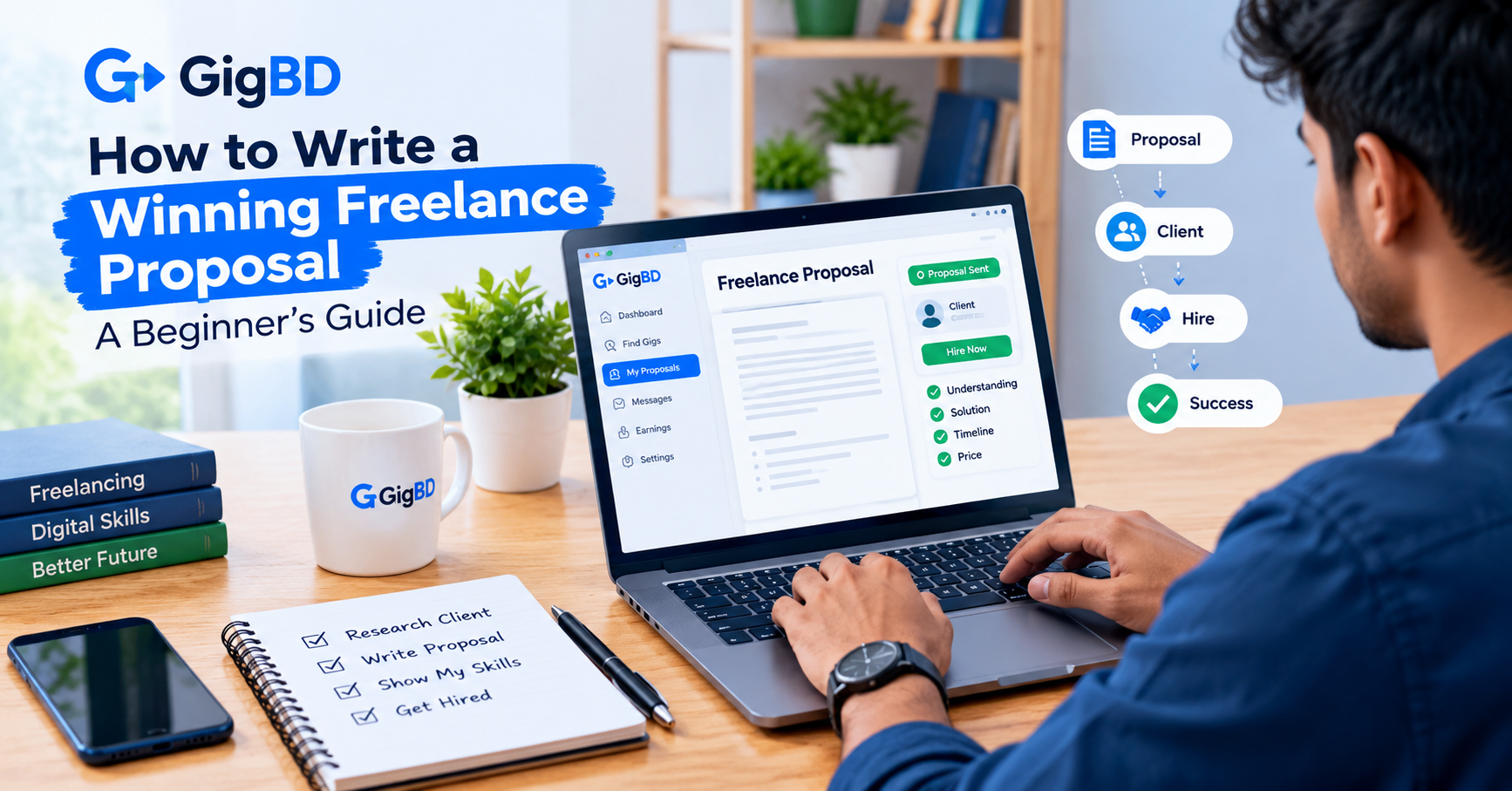
How to Write a Winning Freelance Proposal: A Beginner's Guide
Finding freelance opportunities is only one part of building a successful freelance career. You also need to convince potential clients that you understand their needs and can deliver quality work.
A freelance proposal is a message or document that explains how you plan to help a client complete a project. A clear, relevant proposal can help you communicate your skills, understand the client's requirements, and stand out from generic applications.
In this guide, you will learn how to write a professional freelance proposal, what to include, which mistakes to avoid, and how beginners can improve their chances of finding suitable projects.
What Is a Freelance Proposal?
A freelance proposal is a written offer that explains how you would approach a client's project. It usually describes your understanding of the task, your proposed solution, relevant skills, estimated timeline, and price when appropriate.
Clients often receive proposals from multiple freelancers. A thoughtful proposal can help them understand why your approach may be suitable for their project.
However, no proposal guarantees that you will get hired. The outcome also depends on the client's requirements, competition, budget, experience, and timing.
Why Is a Good Freelance Proposal Important?
A well-written proposal can help you in several ways.
1. Show That You Understand the Project
Clients want to know that you have read their requirements and understand the problem they need to solve.
2. Explain Your Value
Instead of simply listing your skills, explain how those skills relate to the client's project.
3. Build Professional Trust
Clear communication, realistic commitments, and relevant examples can help create a positive first impression.
4. Set Expectations
A proposal can clarify the work you will deliver, the expected timeline, and the proposed price.
5. Start a Useful Conversation
A relevant question about the project can help you and the client determine whether you are a good fit.
Step 1: Read the Job Description Carefully
Before writing your proposal, read the entire job description.
Identify the client's main objective, required skills, expected deliverables, deadline, and any special instructions.
For example, a client looking for five SEO blog posts may care about research, readability, keyword placement, and on-time delivery.
A generic proposal that says only "I can write articles" does not explain how you will meet those requirements.
Take a few minutes to understand the project before applying. If the client asks specific questions, answer them directly.
Step 2: Start With a Relevant Introduction
Your opening should be short and connected to the client's needs.
Avoid long introductions about your personal history. Instead, show that you understand what the client wants to achieve.
For example:
"Hello, I understand that you need clear, engaging blog articles that are organized for online readers. I can help you prepare well-structured content based on your requirements."
This opening is more relevant than a message that simply says, "Dear Sir, I need this job."
Use the client's name when it is available and appropriate, but never invent personal details.
Step 3: Explain How You Will Solve the Problem
The most important part of a proposal is explaining what you will do.
Describe your approach in simple language. Focus on the actual project rather than making broad claims about your abilities.
For a content writing project, you might explain that you will research the topic, organize the article with useful headings, write original content, and review grammar before delivery.
For a graphic design project, you could explain how you will follow the client's brand guidelines, create a draft, and make the agreed revisions.
Make your proposed approach specific enough for the client to understand what they will receive.
Step 4: Highlight Relevant Skills and Samples
Mention the skills that are directly relevant to the project.
If you have completed similar work, share a suitable sample when the platform permits it. A short explanation of what the sample demonstrates can make it more useful.
If you are a beginner with no paid client experience, do not pretend otherwise.
Instead, use personal projects, practice assignments, or original samples to demonstrate your abilities. Clearly identify practice projects as samples rather than paid client work.
Clients need an honest understanding of what you can deliver.
Step 5: Explain the Deliverables and Timeline
Whenever the project details allow it, explain what you intend to deliver and how long the work may take.
For example, a proposal for a blog article might include:
One original article of the agreed length.
Clear headings and organized paragraphs.
A proofreading and editing pass.
Delivery within an agreed timeframe.
Only promise deliverables that the client has requested or that you have discussed.
Avoid unrealistic deadlines. If you need more information before estimating the time, ask a brief question instead of making an unsupported promise.
Step 6: Set a Reasonable Price
Your price should reflect the project's scope, complexity, deadline, and required skills.
Before submitting a quote, consider how much time the work will take, whether research is necessary, how many revisions are included, and what fees may apply through the freelance platform.
Do not automatically offer the lowest price just to win a project. A very low quote may not be worthwhile if the work requires substantial time.
If the client has already provided a budget, explain how your proposed deliverables fit that budget. Follow the platform's rules when discussing payments.
Step 7: End With a Clear Next Step
Finish your proposal politely and professionally.
You can invite the client to discuss the project details or clarify any outstanding requirements.
For example:
"I would be happy to discuss your requirements and confirm the scope and timeline before getting started. Thank you for considering my proposal."
Keep the closing short. The goal is to make it easy for the client to respond.
Freelance Proposal Example for Beginners
Here is a sample proposal for a fictional content writing project. Adapt it to the real job rather than copying it without changes.
Subject: Proposal for Your Blog Writing Project
Hello,
I understand that you are looking for a writer who can create clear and engaging blog content for your website.
I can help you prepare a well-organized article based on your topic, target audience, and content requirements. My approach includes researching the subject, organizing the article with relevant headings, writing original content, and reviewing the final draft for clarity and grammar.
Although I am building my freelance experience, I can share relevant writing samples so you can evaluate my work before making a decision.
I would be happy to discuss the article length, deadline, and other requirements so that we can agree on the project scope and price.
Thank you for your time and consideration.
Best regards,
[Your Name]
This example is a starting point, not a universal template. Replace the general statements with details that directly address each client's project.
Common Freelance Proposal Mistakes to Avoid
1. Sending the Same Message to Every Client
A proposal should respond to the specific project. Generic applications may fail to show that you understand the client's needs.
2. Writing Too Much
Long introductions and unrelated personal information can make a proposal difficult to read. Keep it focused on the client's problem and your proposed solution.
3. Making False Claims
Never invent previous clients, qualifications, work experience, or results. Honest communication helps establish realistic expectations.
4. Ignoring the Job Requirements
If the client requests a specific skill, format, or answer, address it clearly.
5. Offering Unrealistic Prices or Deadlines
Do not promise work you cannot deliver within the proposed budget or timeframe.
6. Forgetting to Proofread
Spelling mistakes, unclear sentences, and incorrect client details can make a proposal appear careless. Review your message before submitting it.
7. Sharing Unnecessary Personal Information
Use the communication and payment systems permitted by the freelance platform. Protect your private information and follow its rules.
How Beginners Can Improve Their Proposal Writing
You can improve your proposals with regular practice.
First, choose projects that match your actual skills. Next, study the job description and identify the client's main problem. Then write a short proposal that explains your approach, relevant abilities, and expected deliverables.
Before submitting it, ask yourself three questions:
Does this proposal address the client's specific needs?
Have I explained what I can realistically deliver?
Is the message clear, professional, and honest?
You can also keep a record of the proposals you send and the responses you receive. Use this information to identify ways to improve your approach without assuming that every unsuccessful application reflects poor writing.
Where Can You Find Freelance Opportunities?
You can explore legitimate freelance marketplaces, professional networks, and business communities to look for suitable projects.
Before joining a platform, review its registration requirements, fees, payment policies, and rules for communicating with clients.
Avoid anyone who promises guaranteed projects in exchange for suspicious upfront payments. Never share passwords or verification codes with recruiters or potential clients.
Remember that finding work takes time. Focus on suitable projects, relevant communication, and consistent improvement rather than sending as many proposals as possible.
Final Thoughts
Writing a strong freelance proposal is an important skill for anyone who wants to work independently. A good proposal demonstrates that you understand the client's requirements, explains how you will approach the project, and sets realistic expectations about the work.
You do not need to use complicated language or make exaggerated promises. Clear communication, relevant examples, and an honest description of your abilities can make your proposal more professional.
Start by applying for projects that match your skills, personalize every proposal, and learn from the responses you receive.
Looking for more practical guides about online work? Visit GigBD for articles on freelancing, digital skills, online jobs, and ways to develop your career.
Frequently Asked Questions (FAQ)
1. What should a freelance proposal include?
A proposal should explain your understanding of the project, your proposed approach, relevant skills or samples, expected deliverables, timeline, and price when appropriate.
2. Can beginners write freelance proposals without experience?
Yes. Beginners can highlight relevant skills, original practice projects, and a clear plan for completing the work. They should describe their experience honestly.
3. How long should a freelance proposal be?
There is no fixed length. Keep it concise enough to read easily while addressing the client's main requirements and any questions in the job description.
4. Should I send the same proposal to every client?
No. Adapt each proposal to the specific project. Relevant details can demonstrate that you understand what the client needs.
5. How much should I charge for freelance work?
Consider the project's scope, estimated working time, complexity, revisions, platform fees, and the client's budget. Make sure your proposed price is realistic for the work involved.
6. Why do clients reject freelance proposals?
Possible reasons include strong competition, a mismatch in skills, budget differences, unclear communication, or the client's changing needs. A rejection does not necessarily mean your proposal was poorly written.
7. Can a good proposal guarantee a freelance job?
No. A good proposal can communicate your suitability, but hiring decisions depend on several factors outside your control.